
By Gold Country Plumbing of El Dorado Hills · Updated March 18, 2025
Ask any longtime El Dorado Hills homeowner about their water heater or shower doors, and hard water usually comes up within a minute. El Dorado Irrigation District draws from a mix of Sierra snowmelt and groundwater sources that carry a moderate-to-high mineral content, and it shows up in the form of scale, spotting, and appliances that wear out earlier than they should.
Hard water is not dangerous to drink, but it is genuinely hard on plumbing. Understanding what it does inside your pipes and fixtures helps explain why some maintenance issues that would be rare elsewhere show up on a predictable schedule here in Cameron Park, Diamond Springs, and greater El Dorado Hills.
What Makes EID Water Hard
Hardness comes from dissolved calcium and magnesium picked up as water moves through soil and rock. EID's supply, drawn largely from the Sierra watershed and local groundwater, tests in the moderately hard to hard range for much of its service area, which includes El Dorado Hills, Cameron Park, and Diamond Springs.
You will not see the minerals in a glass of water, but you will see them accumulate everywhere that water evaporates or heats up, from shower glass to the inside of your water heater tank. Hardness levels can also vary somewhat block by block depending on whether a home draws primarily from treated surface water or a blended groundwater source, which is one reason two neighbors can report very different scaling experiences.
Where the Damage Shows Up First
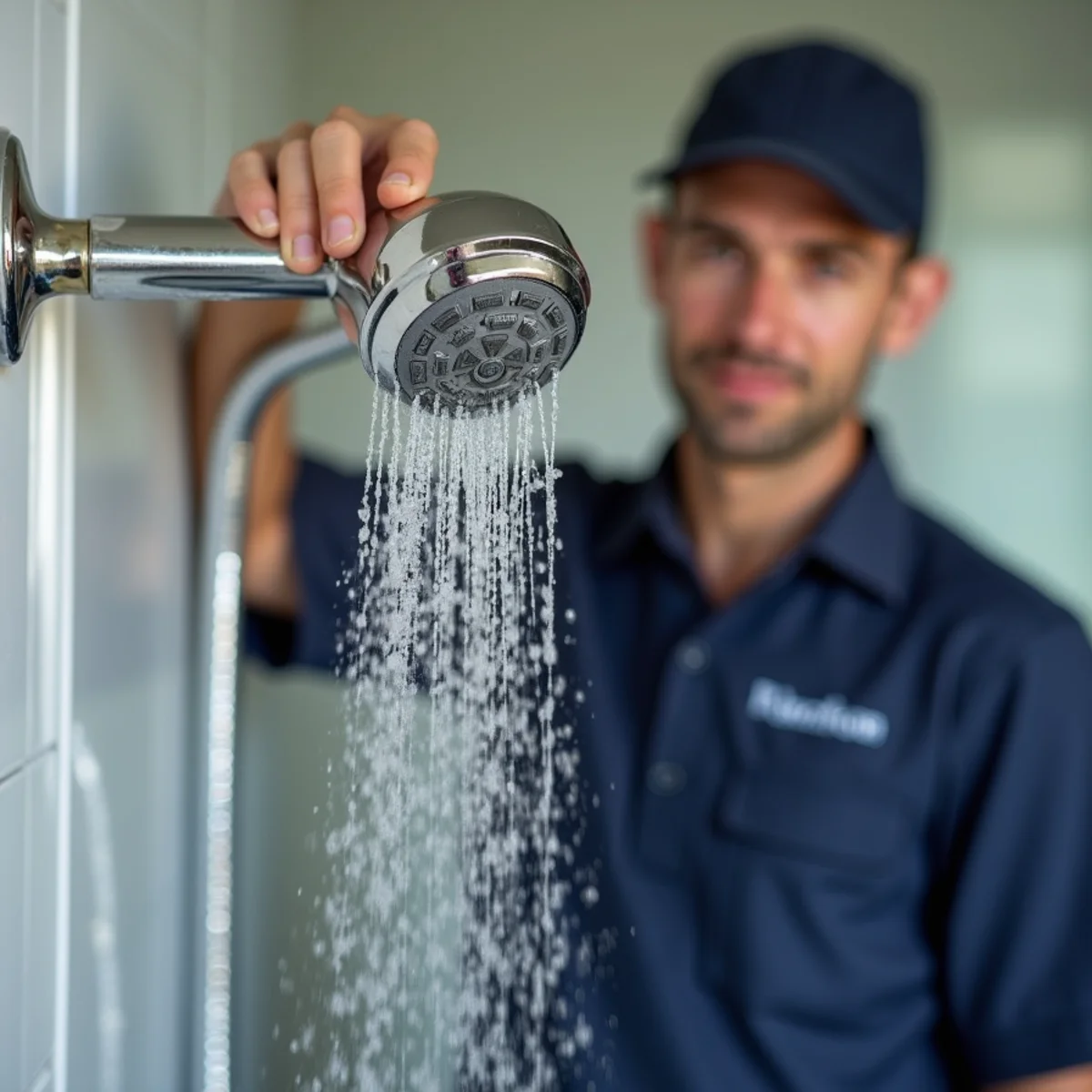
Fixtures are usually the first visible sign: white, chalky buildup on faucet aerators and showerheads that reduces water pressure, cloudy spots on glass shower doors, and soap that will not lather well. Underneath the visible signs, the same minerals are settling as sediment inside your water heater tank and narrowing the passages in tankless heat exchangers.
- Chalky white buildup on faucets, showerheads, and aerators
- Persistent water spots on glass shower doors and fixtures
- Reduced lather from soap and shampoo
- Dingy laundry despite using enough detergent
- Rumbling or popping sounds from a water heater as sediment builds
The Cost of Ignoring It
Sediment buildup inside a tank water heater reduces efficiency and can shorten its life by several years, turning what should be a 10–12 year appliance into one needing replacement closer to 7–8 years. In tankless units, unmanaged scale restricts flow and can trigger error codes or reduced hot water output well before the unit's expected lifespan.
Fixtures fare no better. Scale-clogged aerators and showerheads lose pressure gradually, which many homeowners mistake for a supply-side problem when it is really mineral buildup at the fixture itself.
What a Whole-House Softener Changes
A whole-house water softener treats water at the point it enters your home, exchanging calcium and magnesium for sodium or potassium before it ever reaches a fixture or appliance. Homeowners who install one typically notice softer skin and hair, less spotting on dishes and glass, and longer intervals between water heater flushes.
Filtration systems can be paired with softening to address taste, chlorine, or sediment concerns, which is common in El Dorado Hills homes on a mix of EID surface water and groundwater sources.
Maintenance That Helps Either Way
Whether or not you install a softener, a few habits slow the damage. Flushing a tank water heater annually removes settled sediment before it hardens. Soaking showerheads and aerators in a vinegar solution every few months keeps flow rate up. And scheduling a professional water heater inspection catches early scale buildup before it forces an emergency replacement.
It also helps to keep an eye on dishwasher and washing machine performance, since both appliances rely on internal heating elements that scale in the same way a water heater tank does. A dishwasher leaving a chalky film on glassware, or a washing machine needing more detergent than the box recommends, is often hard water at work rather than a machine problem worth replacing.
Protect Your Plumbing With Gold Country Plumbing
We install and service whole-house softeners and filtration systems throughout El Dorado Hills and Cameron Park, sized to your household's actual water use and hardness level. If your fixtures are scaling faster than they should or your water heater is making noise, it is worth a look before hard water shortens its lifespan further.
Call (831) 290-4327 for a free water treatment consultation.