
By Gold Country Plumbing of El Dorado Hills · Updated February 11, 2025
Every homeowner who calls us about a failing water heater eventually asks the same question: should the replacement be tankless or another tank? In El Dorado Hills, Auburn, and the rest of the Sierra foothills, the honest answer depends on more than national buying guides suggest, because our elevation, our well and EID water, and our older garage layouts all push the decision in specific directions.
Foothill winters send incoming water temperatures lower than in the Sacramento Valley, which affects how hard a tankless unit has to work to hit your setpoint. Meanwhile, El Dorado Irrigation District water carries enough hardness to scale a heat exchanger faster than in softer-water regions. Both systems can serve a foothill home well, but only if they are sized and maintained with these local realities in mind.
How the Two Systems Actually Work
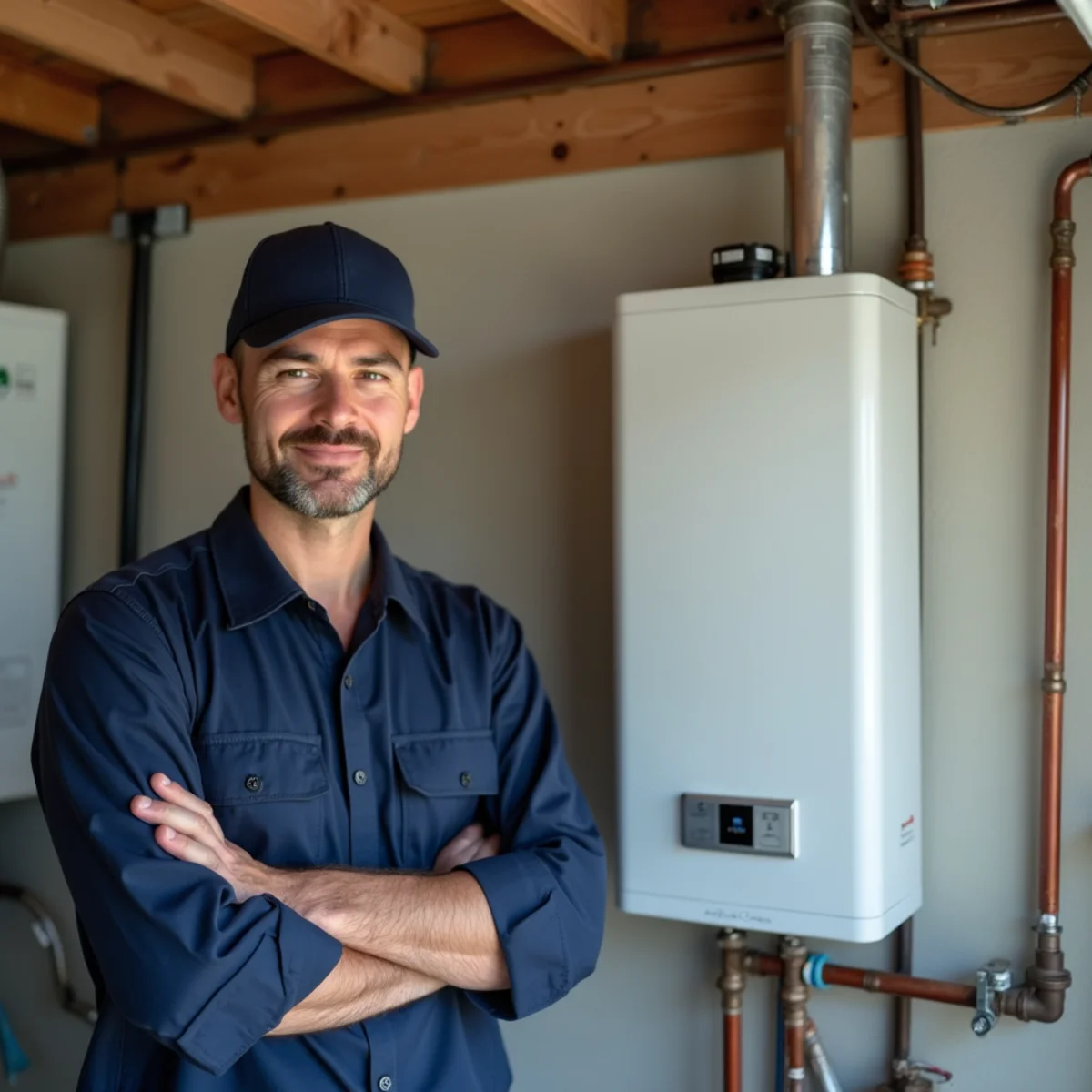
A tank water heater keeps 40 to 50 gallons hot around the clock, ready the instant you open a tap, but it reheats that reserve continuously and eventually runs out during back-to-back showers. A tankless unit heats water on demand as it flows through, so it never runs out, but its output is limited by how fast it can raise the temperature of cold incoming water.
That distinction matters more here than in flatter, warmer parts of the Sacramento metro. Groundwater and municipal supply temperatures in the foothills can dip into the 40s in winter, which means a tankless unit has to work harder for the same gallons-per-minute output than it would in a milder climate.
Upfront Cost and Installation Reality
As a Sacramento-area planning benchmark, a straightforward 50-gallon tank replacement typically runs in the $800–$2,000 range, while a tankless conversion often lands between $1,500 and $3,500 depending on venting, gas line upsizing, and electrical needs. Homes built before the mid-1990s in Auburn and older El Dorado Hills neighborhoods sometimes need a larger gas line or a dedicated 120V outlet added for tankless, which adds to the labor side of that range.
Tank replacements are usually a same-day swap when the closet or garage space already fits code. Tankless installs take longer because of venting changes, but they free up floor space that many foothill garages, with their propane tanks and extra storage, can put to better use.
Hard Water Changes the Math
EID-supplied neighborhoods and many private wells in Cameron Park, Auburn, and Rescue carry noticeable hardness. In a tank heater, that mineral content settles as sediment in the bottom, which a homeowner can flush out once a year. In a tankless unit, the same minerals scale the narrow heat exchanger passages, which restricts flow and shortens the unit's effective life if it is never descaled.
This is the single biggest factor foothill homeowners underestimate. A tankless system paired with a whole-house water softener or filtration setup will comfortably outlast one running raw hard water, and we regularly recommend pairing the two so the investment in tankless actually pays off over its expected 15–20 year service life.
Space, Venting, and Older Foothill Garages
Many homes off Green Valley Road and around Auburn's older subdivisions have detached or narrow garages where a 50-gallon tank eats real storage space. Tankless units mount to a wall and free up that footprint, which is a genuine draw for smaller lots.
The tradeoff is venting. Tankless units need dedicated intake and exhaust venting through an exterior wall or roof, and on some older homes that means new penetrations and additional labor that a straightforward tank swap does not require.
Which Homes Do Best With Tankless
Tankless tends to make the most sense for larger households running multiple showers back to back, homeowners planning to stay in the house long enough to recover the higher upfront cost, and anyone already installing or planning to install a softener for EID or well water.
- Families of four or more with staggered morning routines
- Homes already budgeting for a water softener or filtration system
- Owners prioritizing garage or utility closet space
- Long-term owners who will see 10+ years of use from the unit
Which Homes Do Best With a Standard Tank
A conventional tank remains the more budget-friendly, lower-maintenance choice for smaller households, rental properties, and anyone who wants a straightforward replacement without rerouting gas lines or venting. It is also the more forgiving option on hard water if annual flushing is unlikely to happen.
- One to three person households with typical usage patterns
- Rental or investment properties where simplicity matters most
- Homes needing a same-day emergency replacement
- Budget-conscious owners planning to move within 5–7 years
Get a Straight Answer for Your Home
Every foothill property is different, and the right call depends on your household size, your water source, and your garage layout, not a generic online chart. Gold Country Plumbing installs and services both tankless and tank water heaters throughout Auburn, Rocklin, and El Dorado Hills, and we will give you an honest recommendation, not an upsell.
Call (831) 290-4327 for a free water heater consultation, or ask about pairing your new system with a softener to protect it from EID and well hardness.