

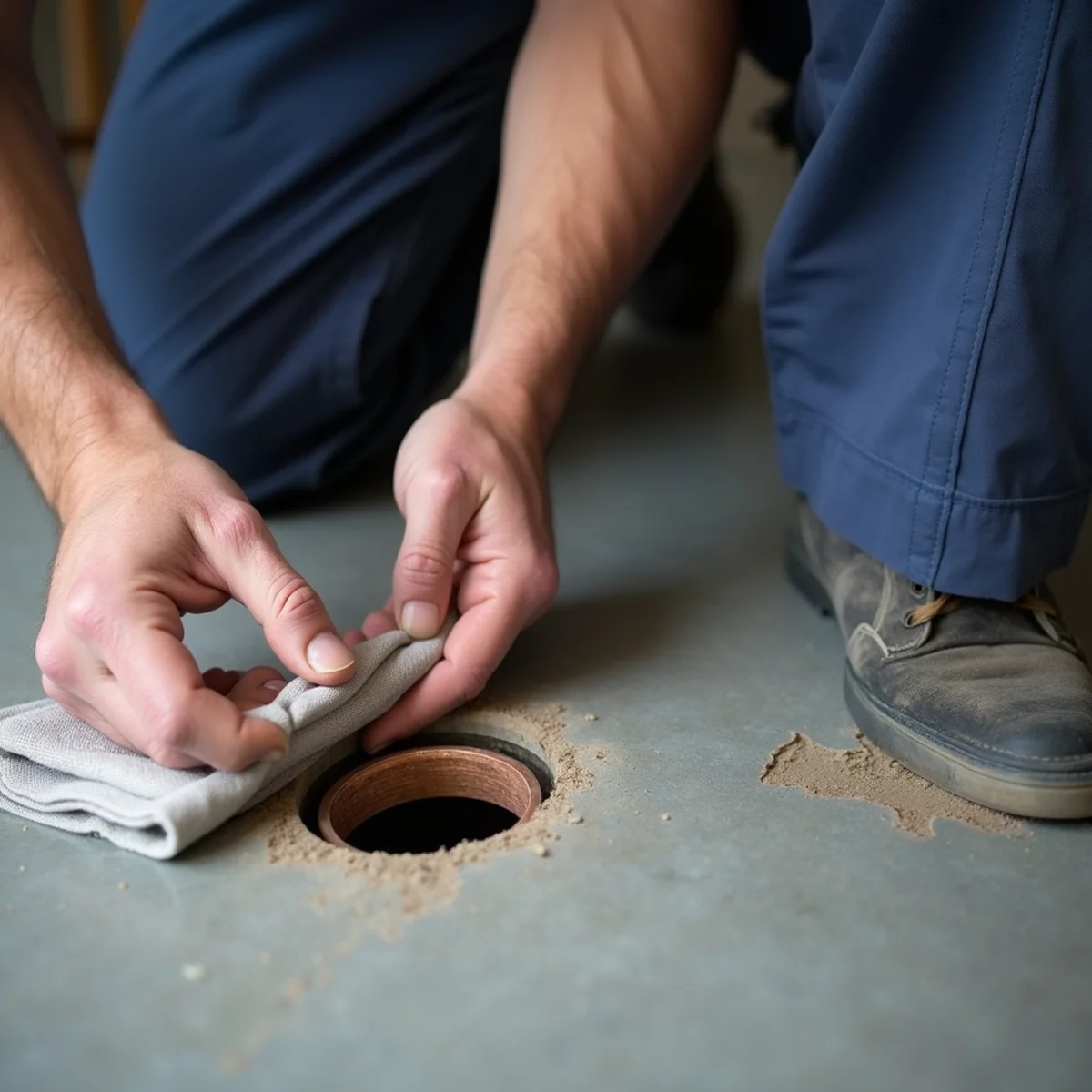
The warning signs are subtle: a warm spot on the floor, the sound of running water with everything off, unexplained meter movement, or a mildew smell that won't quit. None of these locate the leak by themselves, which is exactly why detection comes before any repair.
Slab leak warning signs
- The water meter moves while every fixture is off
- A warm or damp spot on the floor (often a hot-line leak)
- The sound of running water beneath the slab
- Reduced water pressure across the home
- A recurring mildew odor or buckling flooring
- Water appearing away from any visible fixture
What's included
Every slab leak repair job in El Dorado Hills covers the essentials below — no vague scopes, no surprise add-ons:
- A pressure test to confirm a leak and whether it's the hot or cold line
- Precise acoustic, thermal and electronic locating to pinpoint the leak
- A clear comparison of spot repair, rerouting or partial repipe
- The repair, opening only the minimal slab or wall area needed
- Protection and restoration of the disturbed flooring or finish
- A re-test confirming the leak is gone and the meter has stopped
- Documentation to support an insurance claim where relevant
How we detect and repair slab leaks
- 1
Confirm and isolate
A pressure test confirms a leak and tells us whether it's the hot or cold line, narrowing the search.
- 2
Pinpoint precisely
Acoustic, thermal and electronic locating equipment pinpoint the leak so access is minimal.
- 3
Choose the right fix
Spot repair through the slab, rerouting the line, or a partial repipe — chosen by the pipe's condition and access.
- 4
Repair and protect
We make the repair, protect surrounding finishes, and restore the opened area.
- 5
Re-test
We verify the leak is gone and the meter has stopped before we close out the job.
Why slab leaks happen in the foothills
El Dorado Hills is built largely on slab foundations, many under 1980s–2000s master-planned homes in Serrano, Blackstone, The Promontory and Bass Lake area, plus custom hillside houses. Expansive clay soils that swell in wet winters and shrink in dry summers put constant stress on the copper lines cast into those slabs. Add high water pressure and abrasion where a pipe crosses rebar, and pinhole leaks develop.
Because the pipe is entombed in concrete, guessing is expensive. A documented diagnostic path — pressure test, then precise locating — is far cheaper than opening the slab in the wrong place.
Repair, reroute, or repipe?
A single accessible leak may justify a spot repair through the slab. Recurring leaks in aging pipe often make rerouting that line — running new pipe overhead or through walls — the smarter long-term fix. When the whole system is failing, a partial or full repipe ends the cycle. We compare the options against the evidence and your home's construction rather than defaulting to the most invasive one.
Why slab leaks hide so well
The pipe is entombed in concrete, so the only clues are indirect — a warm spot on the floor, the sound of running water with everything off, a meter that moves with the taps closed, or a mildew smell that won't quit.
None of these locate the leak by themselves, which is exactly why detection comes before any repair. Guessing means opening the slab in the wrong place — an expensive mistake we're equipped to avoid.
Repair, reroute or repipe?
A single accessible leak may justify a spot repair through the slab. Recurring leaks in aging pipe often make rerouting that line — running new pipe overhead or through walls — the smarter long-term fix.
When the whole system is failing, a partial or full repipe ends the cycle. We compare the options against the evidence and your home's construction rather than defaulting to the most invasive one.
What affects the price
We use upfront, flat-rate pricing and give you the number before we start — no fake fixed quotes online, because the honest answer depends on your home. For slab leak repair in El Dorado Hills, the main factors are:
- Detection method and how concealed the leak is
- Repair approach — spot repair, reroute or repipe
- Access through flooring and slab
- Whether it's an isolated leak or a failing system
- Restoration of flooring and finishes
Where we provide slab leak repair
We detect and repair slab leaks across El Dorado Hills — the 1980s–2000s slab homes of Serrano, Blackstone and Bass Lake area especially — plus Folsom, Granite Bay, Citrus Heights and Rancho Cordova. Expansive clay and slab foundations make hidden under-slab leaks a signature foothill problem, so precise location saves your floor from needless jackhammering.
We cover Folsom, Cameron Park, Placerville, Granite Bay and dozens more communities across the western slope and greater Sacramento region.
Ready to schedule slab leak repair?
Same-day service and a 60–90 minute emergency response across the western slope. Licensed, insured and upfront on price.
Good to know
Frequently asked questions
Related reading
Does Homeowners Insurance Cover Slab Leak Repair in California?
Slab leak coverage is one of the most misunderstood parts of a homeowners policy. Here's what's typically covered, what isn't, and how to document a claim correctly.
Local-SpecificFolsom Lake-Area Soil Movement and Slab Leak Risk Explained
The clay-heavy soil around Folsom Lake expands and contracts with the seasons, putting real stress on slab plumbing. Here is how that shows up as a leak.