
By Gold Country Plumbing of El Dorado Hills · Updated January 28, 2025
El Dorado County is unusual: you can start your morning in El Dorado Hills at a mild 40°F and drive 45 minutes up US-50 into Pollock Pines or the Tahoe corridor to find temperatures well below freezing and snow on the ground. That elevation swing means plumbing built for a mild valley climate is often pressed into service at mountain-cabin conditions during a hard cold snap — and it shows.
Every winter, we field a wave of burst-pipe calls that follow the same pattern: a fast-moving cold front, a pipe running through an uninsulated crawl space or exterior wall, and a homeowner who wakes up to water where it shouldn't be. Understanding why it happens is the first step to making sure it doesn't happen to you.
The physics: it's pressure, not just ice
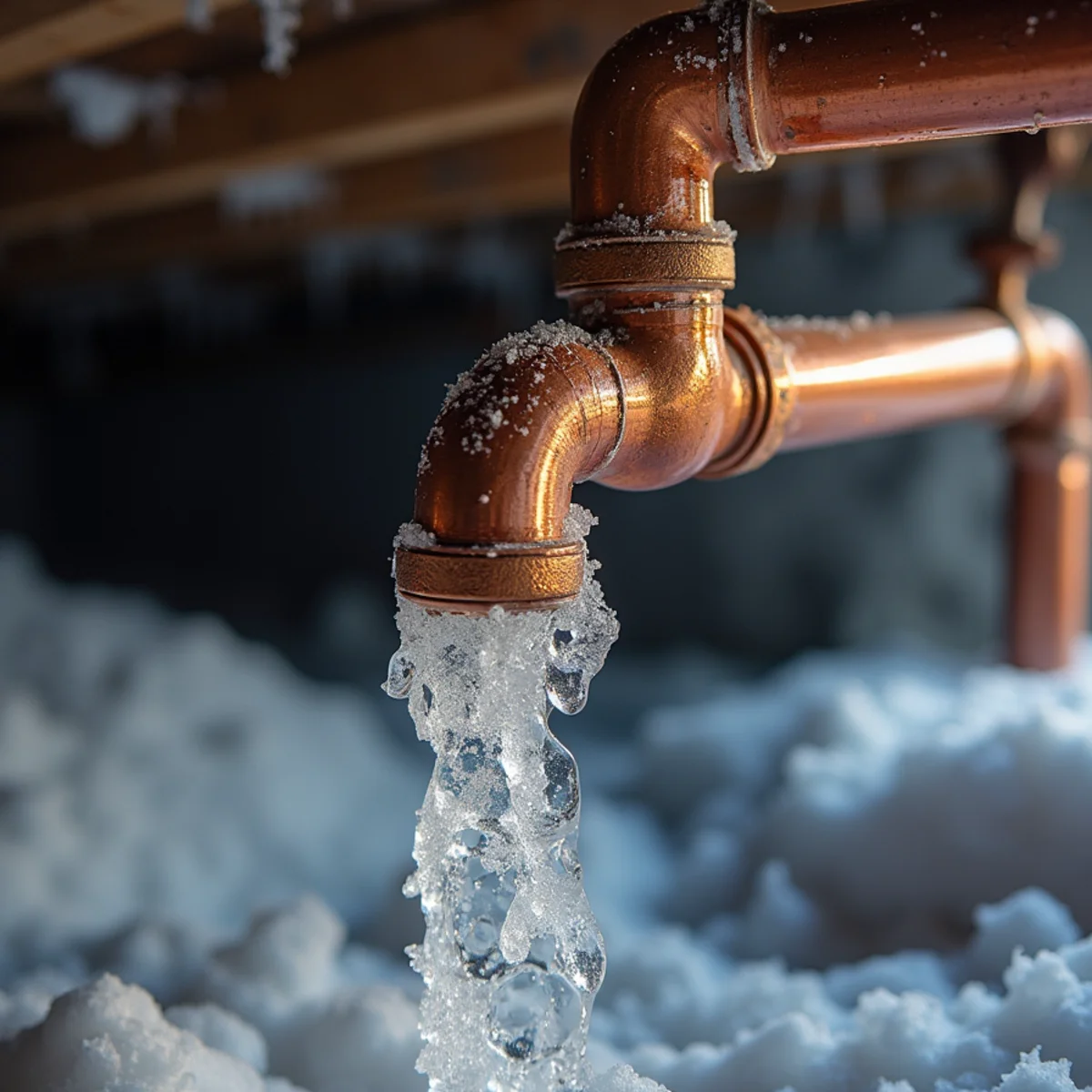
Water is one of the few substances that expands as it freezes rather than contracts. When water in a pipe freezes, ice forms and blocks the line, and continued freezing builds pressure between the ice blockage and a closed faucet downstream. That pressure — not the ice itself — is usually what splits the pipe, often at a point well away from the actual ice plug. That's why a burst often shows up somewhere unexpected relative to where the cold hit hardest.
Why elevation changes everything in this county
A home in El Dorado Hills at roughly 800–1,200 feet elevation might see a handful of nights near freezing each winter. Move up to Pollock Pines at around 3,900 feet, or further to the South Lake Tahoe corridor, and sustained sub-freezing nights are routine. Homes built at those elevations, or cabins used seasonally, need genuinely different plumbing protection than valley homes — insulated and heat-taped exposed lines, pipes routed away from exterior walls, and in some cases a different mindset around leaving the heat on when the home is unoccupied.
The most vulnerable pipes in a typical foothill home
Not every pipe is equally at risk. The ones that fail are almost always in the same few spots.
- Exterior hose bibs and the pipe just inside the wall behind them
- Pipes running through unheated garages
- Crawl-space plumbing without adequate insulation or skirting
- Pipes in exterior walls, especially on the north side of the house
- Supply lines to outdoor kitchens, pool equipment, and irrigation backflow devices
Prevention that actually works
Foam pipe insulation sleeves on exposed lines are inexpensive and effective for the mild freezes typical of El Dorado Hills and Cameron Park. For homes at higher elevation, self-regulating heat tape under the insulation adds real protection during extended cold snaps. Disconnect and drain garden hoses before the first hard freeze of the season, and cover outdoor faucets with insulated hose-bib covers.
During an active cold snap, letting a faucet drip slightly on the coldest-vulnerable line relieves building pressure, and opening cabinet doors under sinks on exterior walls lets warmer house air reach the pipes. If you're leaving a Pollock Pines or Tahoe-corridor property unoccupied for more than a day or two in winter, don't just lower the thermostat — either keep it at a minimum of 55°F or have the water system professionally winterized.
What to do the moment you suspect a frozen or burst pipe
If a faucet suddenly produces no water during a cold snap, you may have a frozen line before it bursts — this is your window to act. Shut off the main water valve as a precaution, and avoid using open flame or a torch to thaw a pipe yourself; that's a common cause of house fires. A hair dryer on low, applied gently starting at the faucet end and working back toward the suspected freeze point, is safer, but if you can't find the freeze or the pipe has already split, it's time to call for burst pipe repair rather than keep experimenting.
If water is already spraying or pooling, follow the same first-response sequence covered in our guide on the first 15 minutes of a plumbing emergency: shut off the water, kill power near any standing water, and call for emergency service.
Why fast response matters even more at elevation
A burst pipe in a Pollock Pines cabin during a snowstorm is a different problem than one in a Sacramento suburb — road conditions, seasonal occupancy, and colder ambient temperatures all raise the stakes. Gold Country Plumbing dispatches 24/7 for burst pipe emergencies throughout El Dorado County, from the valley floor up through the US-50 corridor, so a cold-snap failure doesn't turn into a multi-day disaster while you wait for help.