
By Gold Country Plumbing of El Dorado Hills · Updated April 21, 2025
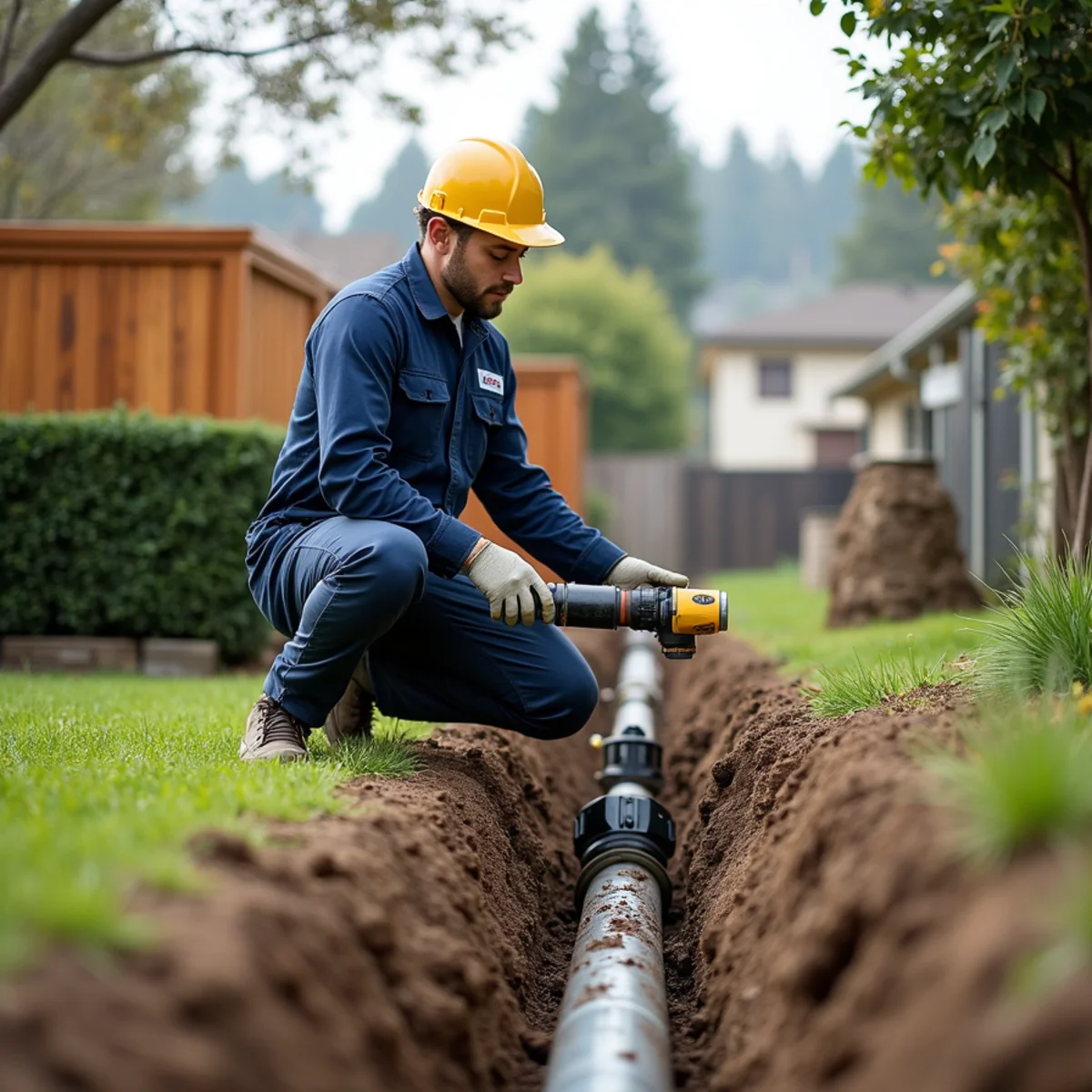
A damaged sewer lateral used to mean one thing: heavy equipment tearing a trench across your yard, through landscaping, and potentially under a driveway or patio. Trenchless sewer repair changed that equation, and for many El Dorado County homeowners it's now the first question they ask when a camera inspection reveals a damaged line — can this be fixed without digging up the yard?
The answer is often yes, but not always. Trenchless methods have real advantages and real limitations, and knowing which situation you're in before you get quotes will help you evaluate whether it's the right call for your property.
How trenchless sewer repair actually works
Two trenchless methods cover most residential repairs. Pipe lining (cured-in-place pipe, or CIPP) involves inserting a resin-saturated liner into the existing damaged pipe and curing it in place to form a new pipe within the old one. Pipe bursting involves pulling a new pipe through the old one while a bursting head fractures the old pipe outward into the surrounding soil. Both methods typically require only small access pits at each end of the run rather than a continuous trench.
The upside for foothill properties
El Dorado County properties often have mature landscaping, sloped yards, retaining walls, decorative hardscape, or driveways that sit directly over the sewer lateral's path — all expensive and disruptive to excavate through with traditional dig-and-replace methods. Trenchless repair sidesteps most of that. It also tends to be faster, often completed in a single day for a standard residential lateral, compared to multi-day timelines for full excavation and yard restoration.
When trenchless isn't the right fit
Trenchless methods aren't universal. Pipe lining requires the existing pipe to still have enough structural integrity to serve as a host for the liner — a severely collapsed, crushed, or offset (bellied) section often can't be lined successfully. Multiple bends in tight succession can also complicate liner installation. And if a camera inspection reveals the damage is concentrated in a short, easily accessed section near the house, traditional spot-repair excavation might actually be faster and cheaper than mobilizing trenchless equipment for a small job.
Cost comparison: trenchless vs. traditional
As a Sacramento-area planning benchmark, sewer line replacement for a typical 24-foot residential run runs around $9,334 on industry cost indexes, and general sewer repair scope runs $1,000–$5,000+ depending on the extent of damage and method. Trenchless methods often land in a comparable or sometimes lower total range once you account for the cost of excavation, yard restoration (replanting, re-sodding, hardscape repair), and potential driveway or concrete replacement that traditional dig-and-replace requires. The comparison flips for very short, easily accessed runs, where traditional repair can sometimes be genuinely cheaper.
What a camera inspection tells you before you decide
The right method isn't a guess — it's determined by what a sewer camera inspection actually shows. A thorough inspection identifies the exact location, length, and type of damage (root intrusion, offset joints, cracks, bellied sections, full collapse), which tells your plumber whether the existing pipe can host a liner, whether bursting is viable given nearby utilities, or whether a section needs traditional excavation. This is also the point where cost estimates become accurate rather than rough ranges.
Permits and considerations specific to this county
El Dorado County requires permits for sewer lateral replacement or major repair regardless of method, and inspection is required before backfilling or covering the work. If your property is on a septic system rather than connected to a municipal sewer, the calculus changes — septic lateral lines and leach field repairs have different considerations that a licensed plumber can walk through separately.
Making the decision
Start with a camera inspection to understand exactly what you're dealing with. From there, get a clear comparison of both methods where trenchless is viable, including total cost (not just the repair line item, but yard and hardscape restoration for traditional dig-and-replace). Gold Country Plumbing offers camera inspections and trenchless sewer repair across El Dorado County, and we'll tell you honestly when traditional excavation is actually the better value for your specific situation rather than defaulting to whichever method is more profitable to sell.
When trenchless is not the right call
Trenchless shines on a cracked or root-invaded lateral that still holds its shape, especially a long run under a driveway or mature foothill landscaping. In those cases the reduced digging usually justifies the higher per-foot cost, because you are not paying to rebuild your hardscape afterward.
But trenchless is not magic. A fully collapsed line has no host pipe to line or burst through, and a severe belly — a low spot where waste pools — is a grade problem that lining will not fix. Tight access, too many sharp bends, or a connection that has to be relocated can also push the job back to a targeted dig. That is exactly why we camera and locate first: the footage, not a sales preference, decides the method, and we will tell you honestly when an open trench is the cheaper, more durable answer.