
By Gold Country Plumbing of El Dorado Hills · Updated May 19, 2025
Fair Oaks is known for its tree canopy — mature oaks, pines, and landscaping that give the area its character and shade. That same canopy is one of the leading causes of sewer line damage in the neighborhood. Tree roots are drawn to the moisture, oxygen, and nutrients inside a sewer line, and even a hairline crack or loose joint is enough of an invitation for a root to work its way in and grow.
Left alone, root intrusion goes from a minor nuisance to a full blockage or structural pipe failure. Here's how to recognize it early, what the fix options actually involve, and how to keep roots from coming back after a repair.
How roots actually get into a sewer line
Roots don't puncture solid pipe. They exploit existing weaknesses — a small crack from ground settling, a loose or offset joint, or a corroded section of older clay or cast-iron pipe. Once a root tip finds that opening, it grows toward the moisture and nutrients inside the line, and as it thickens over months and years, it can widen the original crack and eventually break the pipe outright.
Early warning signs
Root intrusion develops gradually, which means there's usually a window to catch it before it causes a full backup.
- Slow-draining sinks, tubs, or showers throughout the house (not just one fixture)
- Gurgling sounds from drains or toilets, especially after flushing or running the washing machine
- Sewage odor in the yard, particularly near where the lateral line runs
- Unusually lush or green patches of grass along the line's path, fed by nutrient-rich leakage
- Recurring clogs that keep coming back within weeks of being cleared
Diagnosis: why a camera inspection is non-negotiable
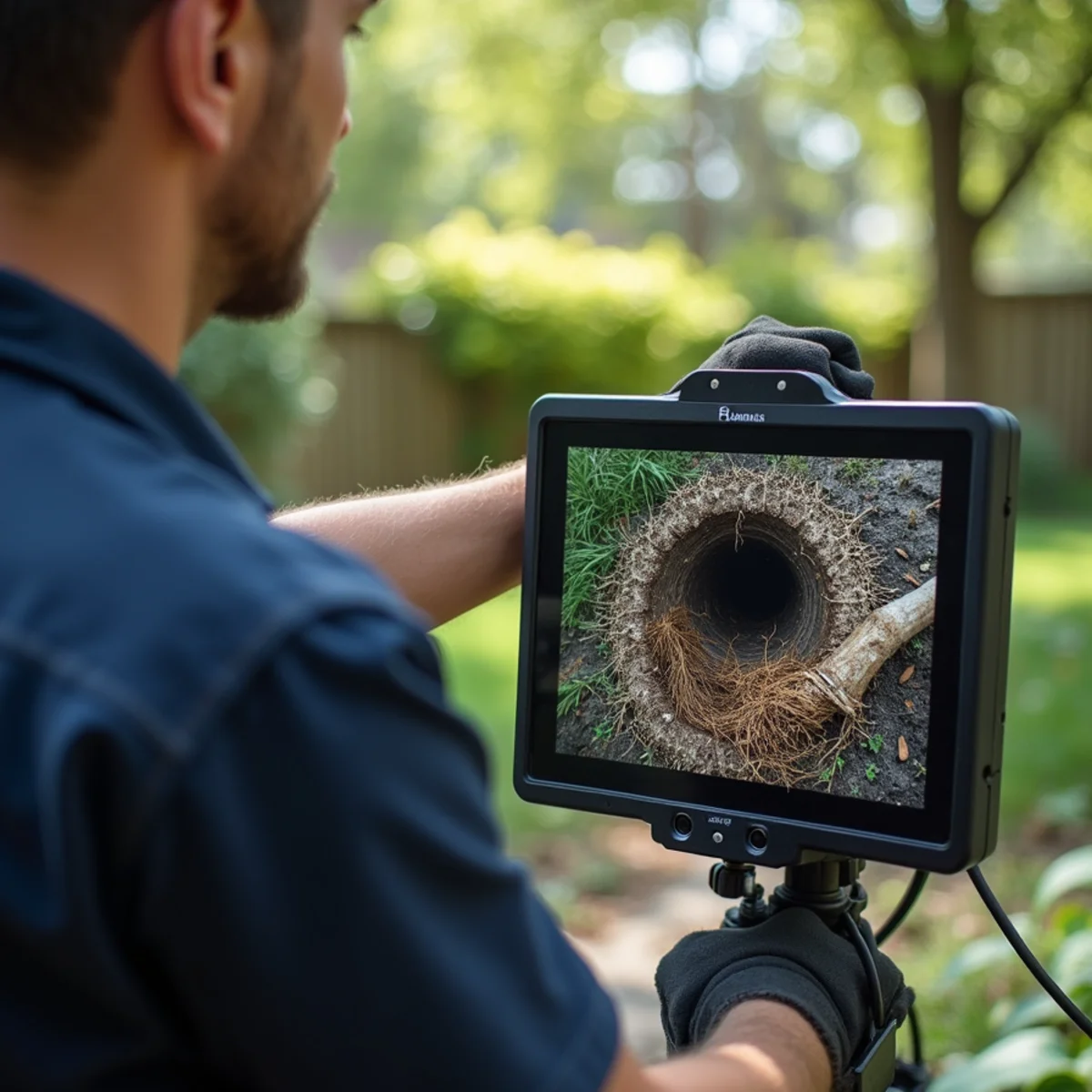
You can't accurately diagnose root intrusion, or judge how severe it is, without a camera inspection. A sewer camera run through the line shows exactly where roots have entered, how extensive the mass is, and whether the surrounding pipe has structural damage beyond the root intrusion itself. This is the step that determines whether you need a simple cleaning, a repeated maintenance plan, or a structural repair — guessing based on symptoms alone often leads to paying for the wrong fix.
Fix options, from least to most invasive
Mechanical root cutting uses a rotating cutting head on a cable to physically cut roots out of the line and restore flow. It's effective but temporary — it doesn't fix the crack the roots grew through, so regrowth is likely without a follow-up plan. Hydrojetting uses high-pressure water to clear roots and buildup more thoroughly than mechanical cutting alone, and is often paired with root cutting for stubborn intrusion. For a line with confirmed structural cracking or an offset joint, trenchless pipe lining seals the interior of the pipe, cutting off the opening roots were exploiting and preventing regrowth at that location for good, without excavating the yard.
When to repair vs. replace the affected section
If a camera inspection shows isolated root intrusion at one or two joints with otherwise sound pipe, trenchless lining or spot repair at those points is usually sufficient. If the inspection reveals extensive root damage across much of the line's length, a bellied (sagging) section that collects standing water and attracts roots, or pipe material that's simply reached the end of its service life (common in older clay lateral lines), full sewer line replacement is the more durable long-term answer. Our guide on whether trenchless sewer repair is worth it walks through that comparison in more detail.
Preventing root regrowth after a repair
A repair without a prevention plan often means facing the same problem again in a few years. After clearing or repairing a root-affected line, a foaming root treatment applied periodically (typically annually) can inhibit regrowth without harming the tree itself. If a repair is being planned in an area with mature trees nearby, discuss root barrier installation or rerouting the line further from the tree's root zone where the yard layout allows it. And for lines with a history of chronic root problems, an annual or biannual camera check as part of a maintenance plan catches new intrusion before it causes a backup.
Should you remove the tree instead?
Removing a mature, healthy tree is rarely the first recommendation, both because it's costly and because a mature tree's roots don't stop growing or die back quickly even after removal. In most cases, addressing the pipe itself — sealing the entry point through lining, or replacing a severely damaged section — solves the problem while letting you keep the tree. Removal becomes a reasonable option only when the tree is already a poor fit for its location (too close to the foundation or lateral line) or is otherwise being removed for unrelated reasons.