
By Gold Country Plumbing of El Dorado Hills · Updated February 11, 2025
When an atmospheric river rolls off the Sierra and dumps several inches of rain in a day, El Dorado County's aging sewer infrastructure and older private lateral lines can get overwhelmed fast. Groundwater seeps into cracked clay pipe, storm runoff overloads combined systems, and tree roots that have quietly infiltrated a line for years suddenly can't handle the extra flow. The result, for a lot of homeowners, is a sewer backup at the worst possible moment.
A sewer backup is one of the more unpleasant plumbing emergencies because it involves contaminated water, and how you respond in the first hour affects both your health and your cleanup bill. Here's the plan.
Recognize the warning signs before it fully backs up
Storm-related sewer backups rarely happen without warning. Gurgling drains, slow-draining tubs on the lowest level of the house, or water bubbling up from a floor drain or shower during heavy rain are all signs the main line is struggling to keep up. If you notice these signs during or right after a storm, stop using water in the house immediately — every flush, shower, or load of laundry adds volume to an already-struggling line.
Step 1: Stop all water use in the home
This is the single most important early action. If the sewer line is backed up or partially blocked, anything you send down a drain has nowhere to go but back up through the lowest fixtures — typically a basement floor drain, a downstairs shower, or a toilet. Tell everyone in the house: no flushing, no dishwasher, no laundry, no showers, until the line is cleared.
Step 2: Treat backed-up water as contaminated
Sewage backup carries bacteria and should be treated as a health hazard, not just a mess. Keep children and pets away from the affected area. Wear rubber gloves and boots if you need to move items out of the way, and avoid direct skin contact with the water. If the backup is significant — more than a puddle around a floor drain — this becomes a job for sewer backup cleanup with proper sanitizing and extraction equipment, not a mop and towels.
Step 3: Locate your cleanout, if you can do so safely
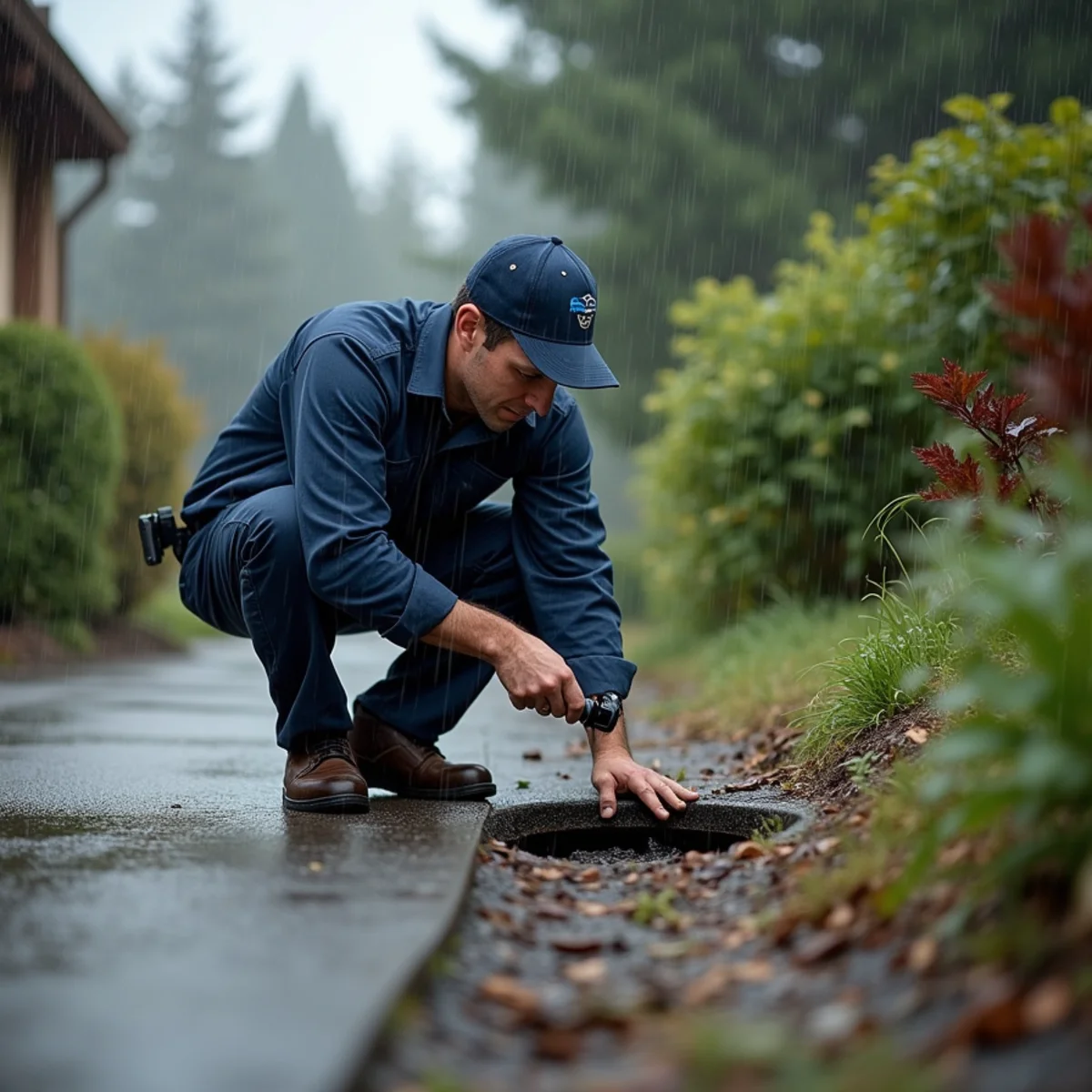
Many El Dorado County homes have a sewer cleanout — a capped pipe, usually near the foundation or in the yard toward the street — that gives a technician direct access to clear the line without pulling a toilet. If you know where yours is and it's accessible without wading through standing water, note its location for the technician. Don't attempt to open it yourself during an active backup; pressure built up in the line can cause it to discharge forcefully when opened.
Step 4: Call for professional sewer service
A storm-driven backup usually needs more than a plunger. Technicians typically start with a camera inspection to identify whether the blockage is debris, root intrusion, or a structural break made worse by storm saturation, then clear the line with hydrojetting or mechanical snaking as needed. If the same storm has affected your neighbors, know that municipal or shared lateral issues can also be at play — a professional can tell you whether the problem is on your side of the property line or the utility's.
Gold Country Plumbing provides 24/7 emergency response for sewer backups across El Dorado County, including Placerville and the surrounding foothill communities that see the heaviest storm runoff.
Why storms hit older lines the hardest
Placerville and much of the surrounding foothill area has a mix of decades-old clay and cast-iron sewer laterals alongside newer PVC. Clay pipe joints are especially prone to root intrusion and small cracks that let groundwater seep in during saturated conditions — a phenomenon plumbers call inflow and infiltration. Under normal dry-weather flow, a line with minor root intrusion or a hairline crack might function fine for years. Add storm-saturated soil and a surge of runoff, and that same line can back up in an afternoon.
Preventing the next storm from causing a repeat backup
If this isn't your first storm-related backup, it's worth investing in a permanent fix rather than repeating the cleanup cycle every wet season. A camera inspection can identify root intrusion, bellied pipe, or cracked joints before the next storm arrives, and options range from mechanical root cutting and periodic hydrojetting maintenance to trenchless sewer repair for a line with structural damage. A backwater valve, installed on the lateral near the foundation, is also worth discussing with your plumber — it allows wastewater to flow out but closes automatically to block a surge from flowing back into the house.